
Winter Solar Performance on the Central Coast: What to Expect
Solar output drops by 30-50% in winter on the Central Coast, and that's not a fault, it's physics. Every July, solar installers field anxious calls from new system owners convinced their panels have failed because their monitoring app shows production half of what it was in January. Understanding what winter production should actually look like is what separates a normal seasonal pattern from an actual problem worth investigating.
### What changes between summer and winter
Three things make winter solar production lower than summer:
1. Shorter daylight hours. Winter days on the Central Coast offer roughly 10 hours of usable daylight, compared with about 14 in midsummer. Less daylight = less production time.
2. Lower sun angle. The sun sits much lower in the northern sky in winter, peaking at around 33° above the horizon in June, compared with 80° in December. Lower angle means panels (typically mounted at 20-30° tilt) capture less direct sunlight per square metre.
3. More cloud cover. Winter brings more days with consistent cloud cover, particularly in the wetter months. Even partial cloud reduces output significantly.
Combined, these factors typically produce winter daily totals that are 30-50% of summer daily totals, and that's normal.
### A typical 6.6 kW system on the Central Coast through the year
Rough monthly generation for a north-facing 6.6 kW system in the Erina area, with good orientation and minimal shading:
- January: 1,000-1,200 kWh - February: 850-1,000 kWh - March: 800-950 kWh - April: 600-750 kWh - May: 450-600 kWh - June: 350-500 kWh - July: 400-550 kWh - August: 550-700 kWh - September: 700-850 kWh - October: 850-1,000 kWh - November: 950-1,100 kWh - December: 1,050-1,200 kWh - Annual total: 8,500-10,500 kWh
Note the spread: a sunny dry winter looks different from a wet cloudy winter. June and July show the biggest year-to-year variability because the difference between "lots of sunny winter days" and "weeks of overcast wet weather" is much larger in winter than summer.
### What a healthy winter day looks like on your monitoring app
On a clear winter day on the Central Coast, a 6.6 kW north-facing system typically:
- Starts producing around 7:30am (vs 6am in summer) - Reaches peak production around midday at 4-5 kW (vs 6+ kW in summer) - Tapers off by 4:30pm (vs 6:30pm in summer) - Generates 18-25 kWh for the day (vs 35-45 kWh in summer)
On a clear winter day, you should see the smooth bell curve shape, just lower and narrower than a summer day. A flat, broken, or extremely low curve on what looks like a clear sky outside is a flag worth investigating.
### Cloudy winter days vs clear winter days
The biggest variable in winter is weather, not season. A cloudy winter day can produce 5-10 kWh on a system that produces 25 kWh on a clear winter day from the same month. This volatility is normal and not a sign of system trouble.
What's worth investigating: - Multiple clear winter days in a row producing well below the expected curve - A specific drop compared to the previous year's same-month-and-weather output - Production stopping entirely during clear daylight hours
### Why winter production matters less than you might think
Winter is also when household electricity consumption rises, heating, more indoor lighting, more cooking, more time at home. The lower solar production combined with higher consumption is what produces the largest winter power bills.
This timing mismatch is part of why batteries are sometimes proposed: storing winter solar for evening use. The economics depend heavily on your specific consumption pattern and bill structure.
For most Central Coast homes, the financial value of solar is concentrated in spring, summer, and autumn, when production is high and consumption is moderate. Winter is the "low return" season but accepting lower winter output is part of a system designed around annual totals, not winter peaks.
### Cold weather and panel performance, actually a small positive
A counterintuitive fact: solar panels are slightly more efficient in cool temperatures than in hot. The temperature coefficient of a typical solar panel means it produces about 5-10% more power per square metre at 10°C than at 40°C, all else being equal.
On the Central Coast, where genuinely cold mornings are rare (winter minimums typically 5-12°C in Erina) and summer panel surface temperatures regularly hit 50-60°C, the cold-weather efficiency boost partially compensates for the shorter winter days. A cool clear winter day produces less total energy than a summer day, but more per hour of available sun than the same panels would produce in summer heat.
### When winter underperformance is actually a problem
A few patterns that warrant investigation:
Production drops sharply mid-day on clear days. Should be peak production hours, drops suggest faults, shading from something newly grown or installed, or a string-level issue.
Year-on-year drop bigger than weather explains. If your monitoring shows 40% lower June production this year than last year, and the weather wasn't dramatically worse, that's worth checking.
Single panel or string visibly underperforming. Multi-string monitoring apps show each string separately. Asymmetric production between strings is a sign of a specific fault rather than a seasonal pattern.
Inverter fault codes or error messages. Don't ignore these regardless of season.
Production at zero for hours during clear winter daylight. Almost always a fault, never a normal seasonal pattern.
### Frequently Asked Questions
#### Why is my June bill higher than my January bill, even though I have solar?
Because June has shorter days, lower sun, more cloud cover, and higher household electricity consumption (heating, lighting, more time at home). The solar offsets less, the bill is more. This is the normal pattern for Australian residential solar.
#### Does frost or condensation damage solar panels?
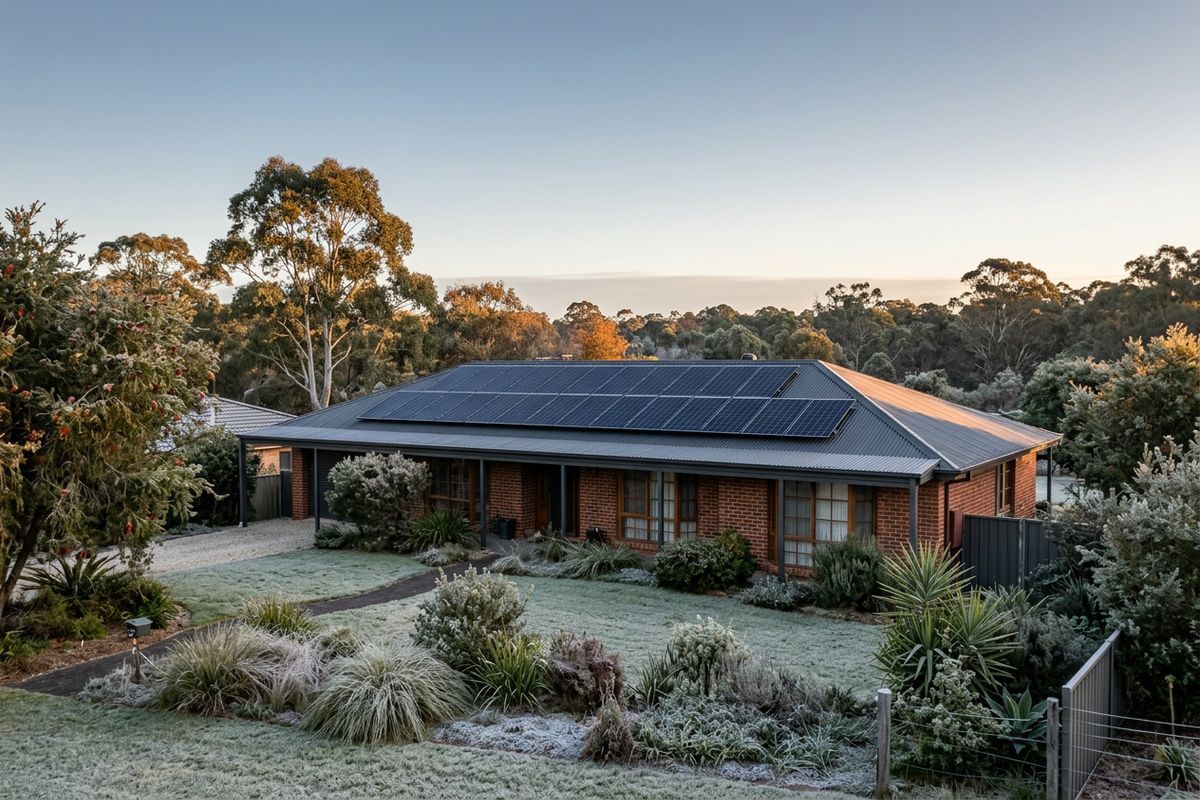
No. Solar panels are designed for outdoor exposure in all conditions experienced across Australia. Frost forms on the glass surface overnight and clears as soon as the sun rises. Condensation is similar. Neither affects panel longevity.
#### Are some panel types better in winter than others?
Most modern panels perform similarly in winter conditions. Slight differences exist between bifacial panels (which capture some reflected light from below, useful on light-coloured roofs), but the difference is small for residential installations.
#### Will battery storage help me through winter?
A battery shifts solar production from daytime to evening, which can reduce grid imports, but if winter production is genuinely low, there's less solar to shift. Batteries help most in shoulder seasons (autumn and spring) when production is moderate but the timing mismatch is significant.
### Concerned About Your Solar's Winter Output in Erina?
Get a free, no-obligation system check from a local SAA accredited solar installer serving the Central Coast.
[Button, Insert Custom Code: "Chat With Our Team", href: https://solarerina.com.au]
Talk to a Local Central Coast Electrician
Get a free, no-obligation quote from a licensed electrician serving the Central Coast.