
Solar Panel Cleaning: When, How, and Whether DIY Is Worth It
Most solar panels don't need professional cleaning, but some do, and it's not always when you'd expect. Australian homeowners spend money on cleaning services that often deliver less than a single decent rain shower would, and skip cleaning when it would actually matter. Understanding when cleaning makes a real difference is the difference between paying for theatre and paying for results.
### The honest baseline
Australian residential solar panels generally lose 3-5% of their output per year to soiling, accumulated dust, pollen, salt spray, and bird droppings on the panel surface. In areas with regular rainfall (which includes most of the Central Coast), natural rain washes most of this off before it accumulates to significant levels.
For a typical Erina home installed on a 15-30° pitched roof, the panels effectively self-clean. A heavy downpour every few weeks during winter and spring rinses away most surface soiling. The 3-5% annual loss assumes some persistent soiling that rain doesn't fully clear, typically concentrated bird droppings, tree sap, or dust patches in low-rain regions.
This is why blanket "annual professional cleaning" recommendations are often overselling the value. For most Central Coast homes, the panels are fine for years without manual intervention.
### When cleaning genuinely matters
Specific conditions that change the equation:
Bird droppings, concentrated. A pigeon nest under the panels can leave heavy concentrated droppings on specific cells. These don't wash off with rain, they bake on and become permanent if not removed. The output of affected cells drops sharply, and the panel can develop hot spots from the localised resistance.
Tree sap, pollen, and leaf litter. Homes under or near eucalypts, pines, or fruit trees can accumulate sticky residues that rain doesn't clear. Pollen during spring can also build up in surprising volume.
Coastal salt spray. Erina homes within a few kilometres of the coast accumulate salt deposits faster than inland properties. Salt creates a slightly opaque film that rain partially clears but not completely. Heavier accumulation in homes closest to the water.
Heavy dust events. After major dust storms (rare on the Central Coast but possible), a single cleaning can significantly restore output.
Flat or near-flat arrays (under 10° tilt). Flatter panels shed water and debris less effectively, so soiling accumulates more. Cleaning matters more for these installations.
Monitoring data showing persistent underperformance. If your monitoring app shows production trending downward over months in ways that don't match seasonal weather, soiling is one possible cause. Worth investigating before assuming worse problems.
### How professionals actually clean panels
A professional solar cleaning service typically:
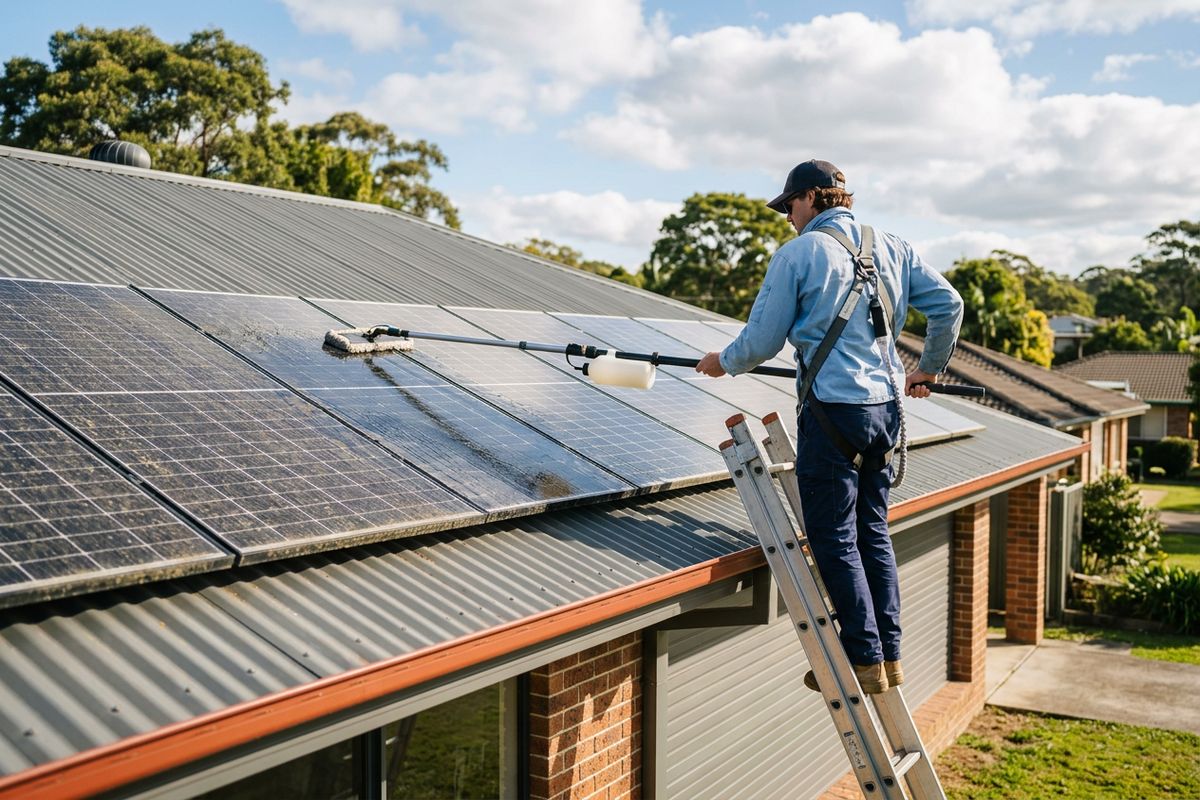
1. Visually inspects the array from the ground or via drone 2. Accesses the roof using appropriate fall protection 3. Uses deionised water (no minerals, leaves no residue) with a soft brush or microfibre pad 4. Works from top to bottom, panel by panel 5. Avoids high-pressure water (which can damage seals around the panel frame) 6. Avoids harsh chemicals (most are unnecessary and some void warranties) 7. Inspects for visible damage (cracks, hot spots, frame issues, mounting concerns) and reports findings
A good clean takes 1-2 hours for a typical residential array and includes basic inspection of the panel and mounting condition.
### DIY cleaning, when it's reasonable
Some homeowners safely clean their own panels. Whether it's a good idea depends on:
Roof access and safety. This is the dominant factor. Australian work health and safety treats residential roof work as fall-risk work, and the same risks apply to homeowners. A single fall off a 4-metre roof can be fatal. Steep, slippery, or high roofs aren't safe DIY territory.
Tools and water quality. A long-handled soft brush or extension pole system with a soft head can clean from ground level on single-storey homes. This is genuinely the safest DIY option. Avoid pressure washers (damage seals), abrasive scrubbers (scratch the panel surface), and harsh chemicals.
Conditions. Clean panels early morning or late afternoon when the surface is cool. Cleaning hot panels with cold water risks thermal stress that can crack cells.
Inverter switched off. Most installers recommend isolating the solar system during cleaning, turning the DC isolator off at the inverter, particularly if there's any risk of water ingress at panel connection boxes.
If your home is single-storey with a low-pitch roof and you have a long-handled cleaning tool, DIY cleaning is reasonable. If your home is two-storey, steep-pitched, or you're not confident in roof safety, hire a professional.
### What NOT to do
A few things that cause more harm than good:
Don't use pressure washers. Even moderate pressure can damage frame seals, cause water ingress at panel junctions, and over time degrade the panel's edge encapsulation.
Don't use abrasive cleaners. Scouring pads, steel wool, or rough scrub brushes can scratch the glass surface of the panel. Scratches reduce light transmission permanently.
Don't use harsh chemicals. Bleach, ammonia-based cleaners, or solvents can damage panel coatings and may void the panel warranty.
Don't clean panels in midday heat. Thermal stress from cold water on hot glass causes microcracks. Always clean early morning or late afternoon.
Don't ignore safety equipment. If you're on the roof, use appropriate harnesses, non-slip footwear, and avoid working alone. The cost of a fall vastly exceeds the cost of professional cleaning.
### How often is "often enough"
For most Central Coast homes:
- Visual check from ground level every 6 months, look for visible soiling, bird activity, or damage - Monitoring app check monthly, production trending vs same month last year - Cleaning every 2-5 years for unshaded inland properties with good rain coverage - Cleaning annually or more for homes under trees, near significant bird activity, very close to the coast, or with flat-tilt arrays - Cleaning immediately if monitoring shows sudden persistent output drops or visible nesting under panels
The right cadence is the one that maintains output without paying for cleaning the panels don't need.
### Frequently Asked Questions
#### Will rain clean my panels enough?
For most Central Coast installations on pitched roofs, yes, particularly during winter and spring when rainfall is more regular. The 3-5% per year soiling loss assumes rain is doing most of the work. Specific concentrated issues (bird droppings, tree sap) don't clear with rain and need direct cleaning.
#### Does cleaning panels void any warranty?
Professional cleaning with appropriate tools and methods doesn't void warranties. DIY cleaning generally doesn't either, provided you avoid pressure washing, abrasives, and harsh chemicals. Damaging panels through improper cleaning (cracks, scratches, sealant damage) can void coverage.
#### How can I tell if my panels actually need cleaning?
Two ways: visual inspection (look for visible dirt, bird droppings, or sap from accessible viewing points), and monitoring data (compare current production to previous years on similar-weather days). If both look fine, cleaning isn't urgent.
#### Is solar panel cleaning expensive?
Professional cleaning costs vary by site complexity, array size, and roof access. The honest comparison: most homes don't need cleaning often enough for it to be a significant ongoing cost, and the lifetime savings from cleaning when needed easily exceed the cost.
### Need a Solar Panel Clean or Inspection in Erina?
Get a free, no-obligation site assessment from a local SAA accredited solar installer serving the Central Coast.
[Button, Insert Custom Code: "Chat With Our Team", href: https://solarerina.com.au]
Talk to a Local Central Coast Electrician
Get a free, no-obligation quote from a licensed electrician serving the Central Coast.