
Bird Mesh and Pest Protection for Rooftop Solar: Why It Matters on the Coast
A single pigeon nesting under your solar panels can cost more than the mesh that would have prevented it. The mess, the noise, the panel damage from acidic droppings, the lost generation from soiled cells, and the eventual cost of cleaning and remediating the nest, easily exceed the few hundred dollars of preventative pest protection that should have been part of the original install. Coastal Central Coast homes are particularly vulnerable, and Erina sits in the part of the region where pigeon and possum activity is consistent enough to make pest protection a sensible default.
### Why solar panels attract pests
The gap between solar panels and the roof creates a sheltered, weather-protected, predator-free cavity that's effectively perfect nesting habitat. Pigeons in particular treat the underside of solar panels as ideal real estate, the panels keep rain off, the warm cells provide gentle heat, and the gap is too small for most predators to reach. Once one pigeon settles, others follow, and a single nesting site can grow into a sustained colony within a season.
Possums and rodents are less common under panels but can occur, particularly on homes near bushland or with nearby tree access to the roof. They cause different problems, chewed wiring being the worst, but the cause is the same: an attractive cavity that wasn't sealed.
### The costs of not preventing it
Soiled panels. Pigeon droppings on solar panels reduce output significantly, often 10-25 per cent across affected cells. Concentrated droppings cause hot spots that can damage the panel itself over time.
Tile and roof damage. Acidic droppings degrade roof tiles, metal sheeting, and especially flashing and seals around penetrations. Over years, this can cause leaks that propagate inside the roof cavity.
Wiring damage. Birds peck at the cabling under panels. Rodents and possums chew through cable insulation. Either can cause arc faults, a fire risk, or system failures that need emergency repairs.
Cleaning costs. Removing a sustained nesting site means accessing the area under the panels, cleaning the droppings and nest material, replacing any damaged cabling, and then installing mesh (which you should have done first). A retrofit clean-and-mesh job typically costs four to ten times the cost of installing mesh at the time of solar install.
Insurance complications. Some home insurance policies exclude damage caused by birds or vermin, and some have specific solar exclusions. Documented preventative measures (like installed bird mesh) can change how insurers respond if a claim is needed.
### What bird mesh actually is
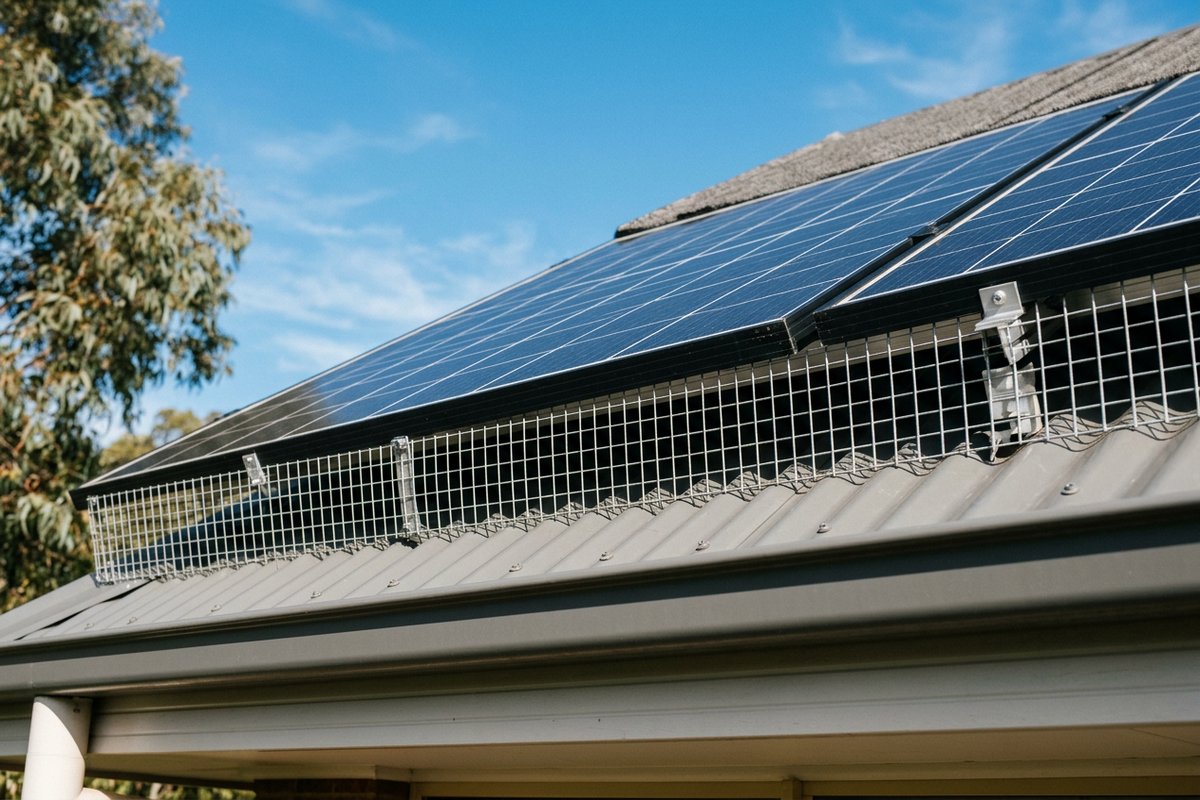
Bird mesh for solar is a galvanised or coated metal mesh, typically 19mm or smaller squares, that wraps around the perimeter of the solar array, sealing the gap between the panels and the roof. Quality installations clip the mesh to the panel frame using stainless steel clips (avoiding any contact between the mesh and the panel surface or the roof in a way that damages either).
Key features of a good mesh install: - Mesh material: Galvanised steel or PVC-coated steel for longevity in coastal conditions - Mesh size: Small enough to exclude pigeons (typically 19mm) but large enough to allow airflow under the panels for cooling - Attachment: Stainless steel clips designed for solar panel frames (no screws into the panel or roof) - Full coverage: Sealed all the way around the array, not just the front edge - Access points considered: If service access is needed, the mesh can be removed and refitted
### Coastal Central Coast specifics
The Erina area sits in the part of the Central Coast with consistent pigeon presence, particularly near shopping centres, food sources, and established suburbs. Closer to the coast (Avoca, Wamberal, Terrigal), salt air corrosion also factors in, coated or stainless mesh is preferred over basic galvanised in genuinely coastal locations.
For homes near bushland on the western fringe of the Erina catchment (toward Somersby or further inland), possum and rodent activity matters more than coastal pigeon pressure. The mesh requirements are similar, but the installer may also recommend sealing roof penetrations and other access routes that aren't directly solar-related.
### When to install bird mesh
The cleanest approach is to install bird mesh at the same time as the solar panels. The installer is already on the roof, the array is fresh, and the mesh adds a small marginal cost to the overall job. Most reputable installers offer bird mesh as an optional add-on, and it's worth taking, particularly if you can see pigeons in your area or your home has had bird issues in the past.
Retrofitting bird mesh to an existing array is also straightforward, but it's more expensive than including it from day one because the installer is doing a dedicated trip. If pests have already established under your panels, the cost includes cleaning, repairs, and then mesh installation.
### Maintenance and longevity
Bird mesh is largely maintenance-free for the lifetime of the solar system. The main reasons to check it:
- After severe weather, high winds or hail can occasionally damage clip attachments - After service work on panels, if a panel is removed or replaced, the mesh in that section needs to be refitted properly - Visual checks during regular solar maintenance, looking for any gaps that could allow re-entry
A good-quality coastal-grade mesh installation should last as long as the solar system itself.
### Frequently Asked Questions
#### How much does bird mesh add to the cost of a solar install?
For a typical 6.6 kW residential array, adding bird mesh at the time of install adds a few hundred dollars to the total system cost. Retrofitting to an existing array typically costs more because of the dedicated trip and labour.
#### Will bird mesh affect panel cooling or performance?
A properly sized mesh (19mm or larger) allows full airflow under the panels, which is what cooling depends on. Performance is unaffected. Solid panels or barriers that block airflow would reduce performance, but mesh designed for solar use doesn't.
#### Can I install bird mesh myself?
It's possible but not recommended. The work involves accessing the roof, handling clips that need to be installed correctly to avoid panel frame damage, and sealing all sides of the array. Most homeowners are better served by having the installer do it, the cost is reasonable and the warranty implications of DIY work on the array are worth avoiding.
#### What if pigeons or other birds are already nesting under my panels?
The nest will need to be removed before mesh can be installed, and any damaged wiring or soiled panels addressed. Some installers offer a combined clean-and-mesh service that handles the existing problem and prevents recurrence in one visit.
### Need Bird Protection for Your Erina Solar Panels?
Get a free, no-obligation site assessment from a local SAA accredited solar installer serving the Central Coast.
[Button, Insert Custom Code: "Chat With Our Team", href: https://solarerina.com.au]
Talk to a Local Central Coast Electrician
Get a free, no-obligation quote from a licensed electrician serving the Central Coast.