

Commercial Solar Installation for Central Coast Businesses
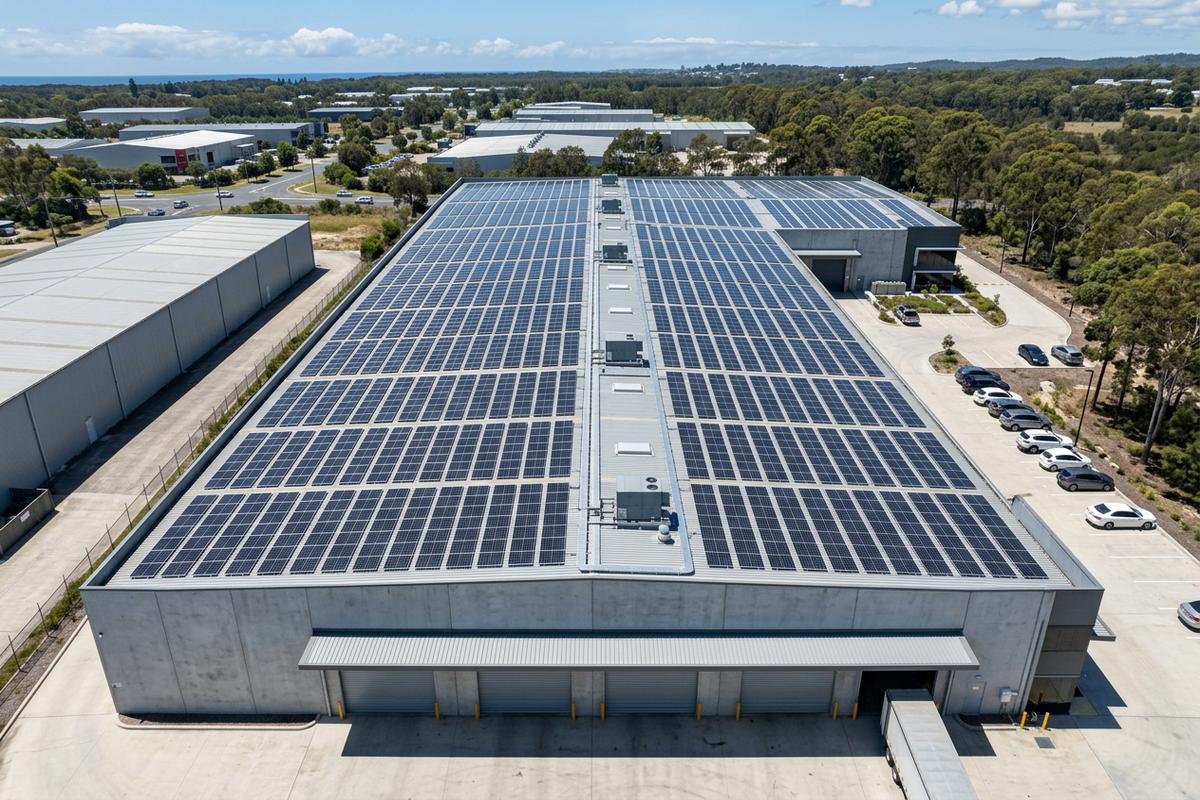
Your last quarterly power bill arrives. Several thousand dollars, with the bulk of consumption sitting in the middle of the working day, exactly when solar would be at peak production. The arithmetic looks straightforward, but commercial solar is genuinely different from residential, and getting it wrong wastes both the upfront investment and the recurring savings the system should be delivering for the next decade.
#### Why Commercial Solar Economics Often Look Better Than Residential
The fundamental reason commercial solar tends to deliver stronger returns than residential is tariff structure. Commercial electricity tariffs typically include a substantial peak rate during business hours, exactly when solar generation is strongest. Self-consumption of solar at commercial peak rates produces savings significantly larger than the equivalent residential self-consumption at standard residential tariffs.
A typical small-to-medium Central Coast business consuming most of its electricity Monday to Friday during business hours can offset a substantial portion of its energy costs through correctly sized solar. The payback period is often shorter than residential equivalents, frequently in the three to five year range for businesses with daytime demand profiles, compared to the longer paybacks common in residential.
#### System Sizing for Business Properties
Commercial solar sizing follows different principles to residential. The starting point isn't roof space or budget, it's the business's load profile. A business that operates Monday to Friday 8am to 5pm has different sizing requirements to a business with extended hours, weekend operation, or significant overnight refrigeration loads.
The aim is to size the system so peak daytime generation closely matches peak daytime demand, maximising self-consumption and minimising exported energy (which earns a lower commercial feed-in tariff than the avoided cost of imports). Oversizing beyond peak demand wastes capital, the exported surplus doesn't pay back fast enough to justify the extra panels. Undersizing leaves savings on the table.
A proper commercial sizing assessment requires interval data from your electricity meter or detailed bills showing time-of-use consumption. This data isn't usually shown on standard commercial bills, but most retailers can provide it on request. Without this data, sizing is guesswork.
#### Roof Type and Mounting Considerations
Commercial buildings come in a wider variety of roof types than residential. Tilt-up concrete with metal roof, structural steel frame with flat or low-pitch roof, industrial sawtooth profiles, and traditional pitched roofs all exist across Central Coast commercial properties. Each has different mounting implications.
Flat or low-pitch roofs typically use ballasted mounting systems, concrete blocks or weighted brackets that hold the panel frames in place without requiring roof penetrations. This works well on most commercial roof types and minimises the risk of leaks. The trade-off is panel tilt, flat-roof installations are typically tilted at ten to fifteen degrees, which is less optimal for output than a steeper angle would be but eliminates the visual and wind-load impact of higher tilts.
Sawtooth and pitched commercial roofs use rail-mounted systems similar to residential but with components rated for higher wind loads. Industrial buildings often have specific structural considerations, older buildings may need engineering assessment to confirm the roof can take the additional load.
#### STC and LGC Rebates for Commercial Systems
The federal Small-scale Technology Certificate (STC) rebate applies to commercial solar systems up to 100 kilowatts capacity. Above that threshold, systems generate Large-scale Generation Certificates (LGCs) instead, which work differently, they're traded on the open market rather than applied as upfront discount.
For most Central Coast small-to-medium businesses, the system size sits comfortably under 100kW, meaning STCs are the relevant rebate. The STC discount is applied to the upfront cost in the same way as residential, your installer handles the paperwork and the reduction shows up in the final quote.
Larger systems (above 100kW) require LGC calculations and have a different commercial profile. If your business is considering a system at or near the 100kW threshold, the choice between optimising for STCs (staying just under) versus going larger for LGCs is worth a specific conversation with your installer and accountant.
#### Approval and Connection Considerations
Commercial solar installations involve more stakeholders than residential. The energy distributor (Ausgrid for most Central Coast businesses) needs to approve the connection, with more rigorous requirements for systems above certain thresholds, particularly anything above 30 kilowatts. The application process can take weeks rather than days, and the approved connection capacity may be lower than the requested capacity if the local network has limitations.
For tenanted commercial properties, the landlord is typically required to approve the installation since panels affect the building. Some landlords welcome solar as a value addition; others require specific terms around panel ownership, system removal at lease end, and roof warranty implications. Sorting this out before committing to an installation saves significant headaches.
#### Maintenance Realities for Commercial Systems
Commercial systems generally have more thorough maintenance regimes than residential. The financial impact of underperformance is greater, a five percent output drop on a commercial system represents substantially more dollars than the same drop on a residential system. Annual inspections, regular monitoring, and prompt response to any flagged issues are standard practice.
Many commercial installations include maintenance contracts that bundle inspection, cleaning where required, monitoring oversight, and priority response. These contracts add modest ongoing cost but typically pay for themselves through early detection of issues that would otherwise reduce output over time.
#### Frequently Asked Questions
How is commercial solar accounted for tax-wise?
Commercial solar systems are generally depreciable business assets. Speak to your accountant about depreciation schedules, GST treatment, and any specific tax incentives available at the time of your installation. Treatment can change with budget cycles and varies based on business structure.
What happens to the system if I sell or relocate the business?
Depends on the business structure and the lease arrangement if applicable. Systems on owner-occupied properties typically transfer with the property. For tenanted properties, the lease terms govern what happens at lease end. Plan for this contingency before installation.
Can my business export solar to the grid for revenue?
Commercial feed-in tariffs are generally lower than residential tariffs and lower than the cost of imported commercial electricity. Self-consumption nearly always delivers better returns than export. Systems are typically sized to minimise export rather than maximise it.
Are there grants or subsidies specific to commercial solar?
Various programs come and go at federal and state level. Current available grants, low-interest loans, and incentives should be checked with your installer at the time of enquiry. Some industries (agriculture, manufacturing, regional development) have sector-specific programs.
#### Powering Your Central Coast Business With Solar?
Get a free, no-obligation site assessment from a local SAA accredited solar installer serving the Central Coast.
<div style="text-align: center; margin: 20px 0;"> <a href="https://solarerina.com.au" style="display: inline-block; background-color: #1e3a8a; color: #ffffff; padding: 14px 32px; text-decoration: none; font-weight: 600; font-size: 16px; border-radius: 6px; font-family: sans-serif;">Chat With Our Team</a> </div>
## Site 2, Tier 2 Blog Posts (16 posts)
Status: COMPLETE, imported via CSV as drafts (will publish drip-style or in batches once Zen confirms go-live). All 16 cover images uploaded to Communitee Media Library. Article schemas placed on each post.
Talk to a Local Central Coast Electrician
Get a free, no-obligation quote from a licensed electrician serving the Central Coast.