

Best Solar Inverters in Australia 2026: A Brand Comparison for Central Coast Homes
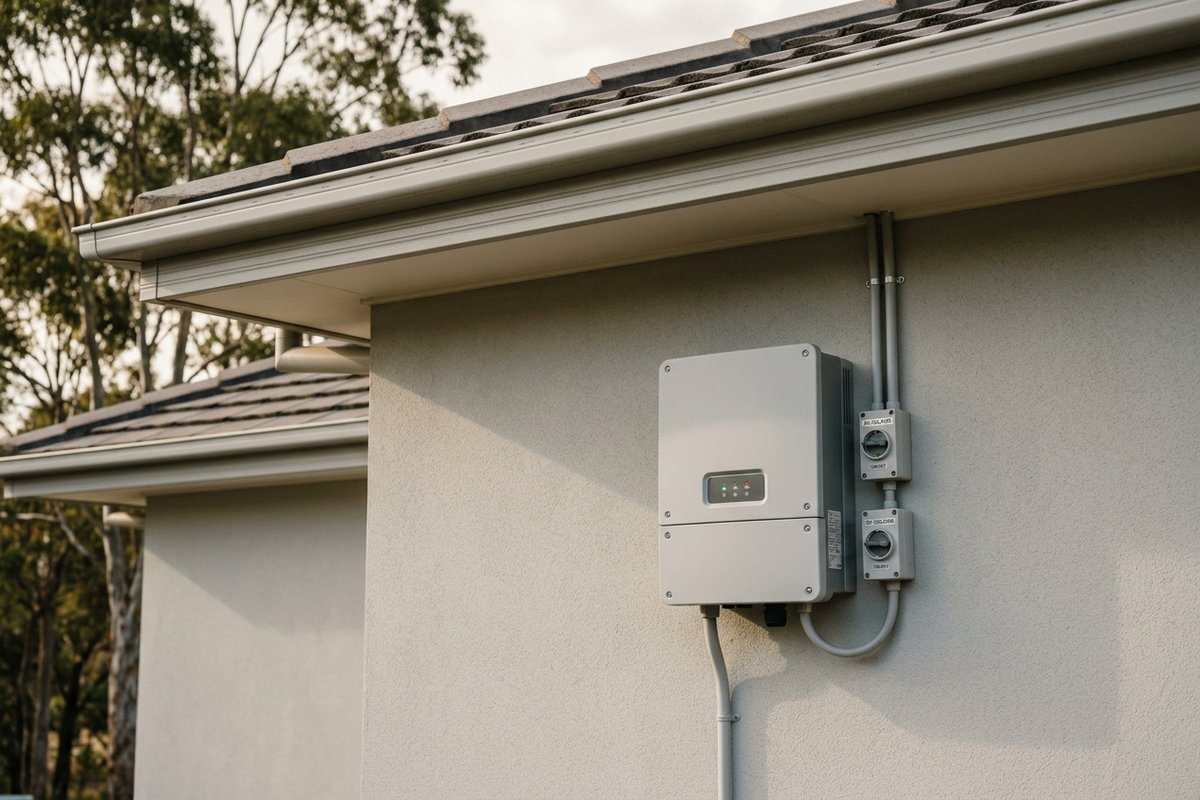
Most solar buyers fixate on the panels, brand, wattage, efficiency. The inverter, sitting quietly on the side of the house, gets treated as an afterthought. That's a mistake. The inverter is what actually determines your system's reliability, monitoring quality, and how easily it can be expanded with a battery later. A premium panel paired with a budget inverter is a system that's likely to underperform and frustrate its owner long before the panels themselves give up.
In 2026, the Australian residential solar market is dominated by five inverter brands. Each has strengths and trade-offs that matter for Central Coast homes specifically.
### Fronius, Austrian engineering, premium price
Fronius inverters, made in Austria, are widely regarded as the premium tier of the residential market. They're known for build quality, long warranties, integrated monitoring through Solar.web, and reliable customer support. The downside is price, a Fronius inverter typically adds $1,000 to $2,000 to the total system cost compared with budget alternatives.
For Central Coast homes, Fronius makes sense if you're investing in a long-term system, value local distributor support, and want the smoothest battery-ready upgrade path. The Symo and Primo models cover most residential needs.
### SMA, German reliability, established track record
SMA, the German manufacturer that effectively invented the modern grid-tied solar inverter, has been in the Australian market longer than most. Their Sunny Boy series is the workhorse, reliable, well-supported, with strong field data over many years of installations across Australian conditions.
SMA sits at a similar price point to Fronius. The monitoring platform (Sunny Portal) is less polished than Fronius Solar.web but still functional. Owners who already have SMA on their system tend to stay loyal, the reliability data is genuinely strong.
### Sungrow, Chinese-made, value-driven, battery-ready
Sungrow has become one of the most-installed inverter brands in Australia, primarily because their pricing sits well below Fronius and SMA while delivering reliable performance. Their hybrid models (SH-RS series) are particularly popular because they're battery-ready out of the box, meaning a Sungrow battery can be added later without replacing the inverter.
For Central Coast homes on a moderate budget who may want to add a battery in 2-5 years, Sungrow's hybrid range is hard to beat on cost-per-feature. Long-term field data is shorter than Fronius or SMA, but warranty coverage is competitive.
### GoodWe, mid-tier value, strong hybrid range
GoodWe has carved out the value-mid-tier of the Australian inverter market. Their inverters are reliable and well-priced, with a strong hybrid range that pairs well with their own battery products as well as several third-party batteries. Build quality sits a step below Fronius and SMA but a step above the entry tier.
GoodWe suits Central Coast homes looking for a balance, better than the cheapest option but without paying the premium for the European brands.
### Huawei, feature-rich, smart-home integration
Huawei's solar inverters offer some of the best monitoring and smart-home integration features in the residential market. The FusionSolar app provides detailed per-panel monitoring when paired with their optimisers, and the integration with EV charging and smart home loads is genuinely capable.
Pricing sits in the mid-tier range. The trade-off is that Huawei's market presence in Australia has fluctuated, and some homeowners are wary of long-term support continuity given trade tensions affecting Huawei more broadly.
### Brands worth being cautious about
There are budget inverter brands in the Australian market that come in significantly cheaper than even Sungrow or GoodWe. Some of these are genuinely fine, others have higher failure rates, slower warranty support, or have exited the Australian market entirely, leaving owners without a path to service when problems emerge. As a rough rule: if an installer is quoting an inverter brand you can't easily find on the CEC approved products list, ask why and verify the warranty support pathway in Australia specifically, not the manufacturer's global support.
### What actually matters for your decision
Beyond brand names, three practical considerations decide the right inverter for an Erina home:
1. Battery upgrade path. If you might add a battery in the future, a hybrid inverter avoids the cost of replacing the inverter when the battery is installed. 2. Monitoring quality. Day-to-day visibility into your system's performance is what makes ownership satisfying, and what catches problems before they become expensive. 3. Local support depth. When something goes wrong (and eventually something will), how quickly can a local installer service the inverter? Major brands have strong distributor networks in Australia; obscure ones can leave you waiting weeks for parts.
### Frequently Asked Questions
#### Can I mix solar panels from one brand with an inverter from another?
Yes, solar panels and inverters are designed to work with any compatible product. The pairing decisions are about voltage and current matching (handled by the installer during design), not brand loyalty. There's no advantage to buying same-brand panels and inverter unless the manufacturer offers a combined warranty.
#### How long do solar inverters typically last?
Standard residential string inverters in Australia typically last 10 to 15 years, with premium brands often pushing toward 15-20 years in good conditions. Microinverters and panel-level optimisers are designed for longer lifespans. Most inverter warranties cover 5 to 10 years as standard, with extended warranty options available for premium brands.
#### What's the difference between a string inverter and a microinverter?
A string inverter sits in one location (usually a side wall of the house) and converts the combined DC output of all panels into AC. A microinverter is a small inverter attached to each individual panel, converting DC to AC at the panel itself. Microinverters cost more upfront but offer per-panel monitoring and better performance when shading affects some panels but not others.
#### Is it worth paying for a premium inverter brand on a small system?
For smaller systems (under 5 kW), the cost difference between a budget and premium inverter is proportionally larger, which can stretch the payback period. For larger systems or where battery readiness is a factor, the premium inverter cost is a smaller fraction of the total investment and the long-term reliability benefits usually justify it.
### Choosing the Right Solar Inverter for Your Erina Home?
Get a free, no-obligation site assessment from a local SAA accredited solar installer serving the Central Coast.
[Button, Insert Custom Code: "Chat With Our Team", href: https://solarerina.com.au]
Talk to a Local Central Coast Electrician
Get a free, no-obligation quote from a licensed electrician serving the Central Coast.